We check our breath before meeting a colleague, choose fresh clothes for a wedding, and make time to look presentable for people we barely know. Then we arrive home exhausted and forget that the person sharing our life deserves consideration too. Hygiene in marriage begins with noticing that gap, gently, without turning home into another place where we must perform.
This companion to episode 1 of Hygiene & Cleanliness in Marriage reflects on the episode and expands it with practical suggestions for shared life. Its invitation is simple: bring everyday care into the relationships closest to you. Whether you are preparing for Nikah or already sharing a home, small habits can make being together more comfortable. This is not a demand for perfection or a judgment about anyone's body.
Inward purification, outward care
The closing words of Al-Baqarah 2:222 connect Allah's love with repentance and purification [1]. The verse has its own context concerning menstruation and marital intimacy; it should not be reduced to a slogan about looking polished. It offers a starting point for reflecting on both our inner lives and our care for physical cleanliness.
Repentance asks us to face our mistakes honestly. Everyday care asks us to notice how our habits affect others. Neither replaces the other. A fresh shirt cannot repair an unkind remark, and a sincere apology does not make practical household responsibilities disappear. A peaceful marriage needs attention to both character and ordinary routines.
Three distinctions help: taharah concerns ritual and legal purification; physical hygiene concerns the body, mouth, clothes, and surroundings; presentability is the reasonable effort we make with grooming and appearance. They overlap, but they are not interchangeable. A preference about folding towels is not automatically a religious command. This article is not a guide to the detailed rulings of wudu or ghusl; learn those from qualified teachers. Appearance, illness, disability, or body odour is not a measure of someone's faith.
Miswak: a small habit with a homeward focus
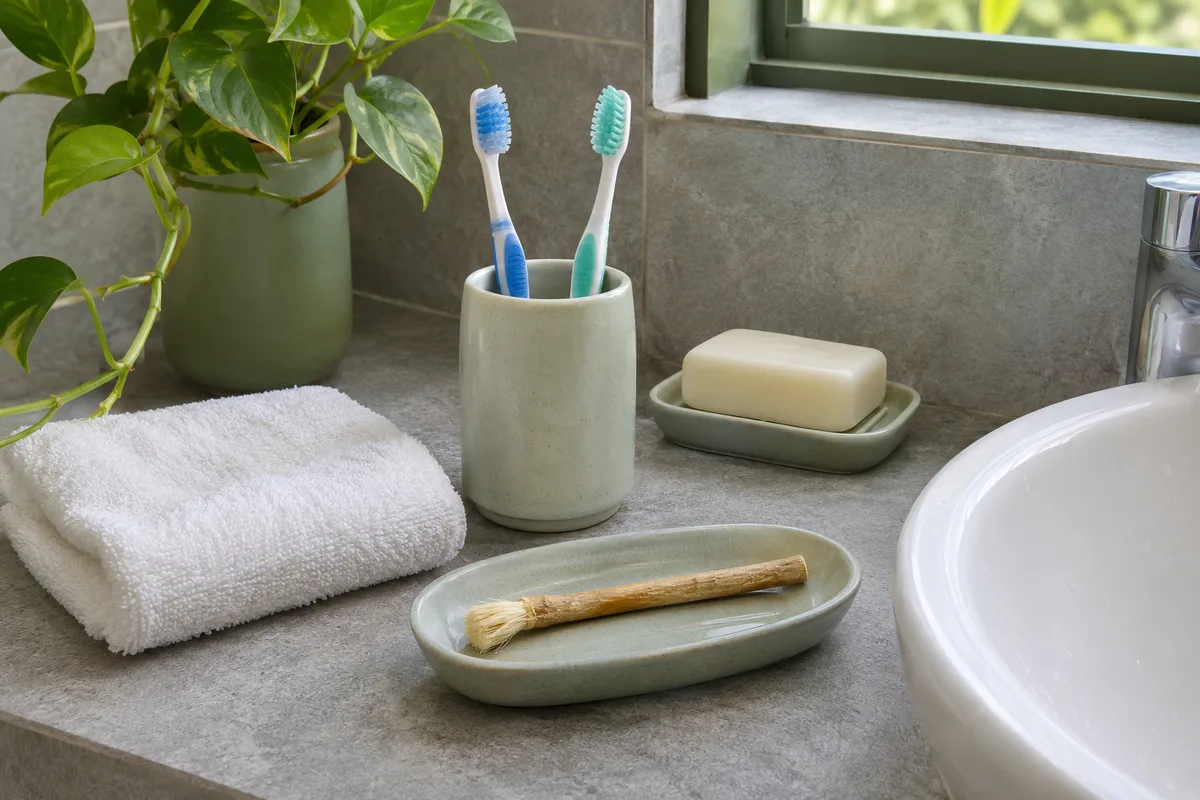
In Sahih Muslim 253a, Aisha reports that the Prophet would begin with siwak when entering his home [2]. Siwak, also called miswak, is a tooth-cleaning stick. The homeward setting is worth pausing over: care was not reserved only for public appearances. Let that reminder shape how you think about returning to the people you love.
Alongside that spiritual reminder, keep a dependable dental routine. The NHS advises brushing with fluoride toothpaste twice daily for about two minutes each time [3]. Miswak should not become a reason to abandon that routine. Keep your own supplies accessible and choose a schedule you can maintain, rather than treating fresh breath as an emergency task before a special occasion.
Make coming home a shared reset
A commute, physical work, caring for children, study, or cooking can leave either spouse tired and uncomfortable. Instead of expecting an immediate, picture-perfect welcome, agree on a little breathing space. Greet one another, put down your bags, wash your hands, and change out of clothes that need washing. Shower when needed and when your circumstances allow.
Build the routine around your actual home. Perhaps one person needs ten quiet minutes while the other finishes a task; perhaps you take turns caring for a child so both can freshen up. Make towels and clean clothes easy to reach. Practical support is often more loving than another reminder. Start with one habit this week, then adjust together.
The responsibility belongs to both of you
Personal hygiene for husband and wife is a mutual responsibility, not a rule for one gender. Both people deserve clean shared spaces, reasonable privacy, and time for self-care. Neither should be made the permanent supervisor of the other's body. Share the laundry and bathroom upkeep rather than leaving the invisible work to whoever complains first.
Make shared-space responsibilities concrete: who changes the bedding, hangs towels to dry, empties the bin, and leaves the bathroom ready for the next person? Decide where used clothes and personal tools belong. There is no universal household timetable. Ask what needs doing, who has capacity, and when to revisit the arrangement. A fair plan changes when work, health, or caring responsibilities change.
Al-A'raf 7:31 speaks about proper dress for worship and avoiding excess [4]. Its balance is helpful: care need not mean expensive products, elaborate grooming, or waste. At home, clean and comfortable can be enough. Consider allergies, sensory preferences, limited mobility, and finances when deciding what works for both of you.
Talk about hygiene without hurting dignity
Choose a private, calm moment, not an argument or a joke in front of family. Describe a specific concern rather than labelling the person. You might say, 'Could we both take a few minutes to freshen up before we sit together?' Ask what would help, and listen before offering a solution. Avoid comparisons with other couples or threats about affection.
If your spouse raises a concern, try to hear the request beneath the awkwardness. You can acknowledge it without accepting a harsh tone. Tiredness, illness, medication, and access to facilities can complicate routines. Sometimes the useful response is assistance, rest, or professional support, not more effort or blame. Respect remains necessary even when the conversation feels uncomfortable.
Before Nikah: practise the ordinary things
Marriage preparation includes the unglamorous habits you already live with. Learn to manage your laundry, keep your bathroom usable, and make room for oral care. Discuss expectations respectfully before marriage: shared chores, privacy, and how each of you prefers to raise sensitive concerns. You are looking for willingness to cooperate, not proof that someone never struggles.
Read more about intention when preparing for Nikah
A realistic checklist for the week
- Keep your twice-daily brushing routine and your own supplies ready.
- Set aside fresh clothes and put used clothes where they can be washed.
- Agree on a short homecoming reset that works for both of you.
- Share one practical task, such as towels, laundry, or bathroom cleaning.
- Ask kindly what makes your spouse comfortable; mention your needs too.
- Review what helped, without scoring each other's appearance or effort.
A few common questions
Is this only advice for married couples?
No. Building manageable habits before Nikah makes them easier to carry into a shared home. Do it for your own wellbeing too, not only to impress a future spouse.
Does cleanliness mean always looking dressed up?
No. Home should allow rest and ordinary human messiness. Aim for reasonable care, not constant presentation. Agree on expectations that respect both people's comfort and capacity.
What if we have very different routines?
Begin with one shared priority and a concrete, kind request. Leave room for different schedules and needs. Hygiene can express care, but it should never become a tool for humiliation or control.
The lasting lesson of this episode is not a shopping list. It is attention: the people at home deserve some of the thoughtfulness we offer outside it. Start small, help each other, and let everyday care become one quiet way you say, 'You matter to me.'